
How Bulgaria ended up defining what a slot machine looks like across half of Europe
Walk into a casino in Bucharest, Sofia, Istanbul or Rome and the cabinets will feel familiar. Much of that visual language was designed in one country.
Bulgaria is not the first country most people would name as a centre of the global gambling industry. Malta has the licences, Sweden and Britain have the best-known studios, Las Vegas has the manufacturers. Yet across southern and eastern Europe, a substantial share of what players actually sit in front of traces back to a company founded outside Sofia in 2002.
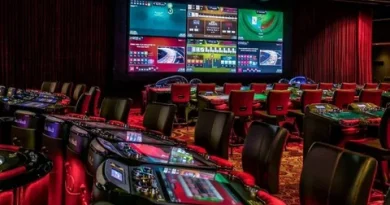
Euro Games Technology began as a hardware business, building the physical cabinets that fill casinos and gaming halls. That origin explains a great deal about the aesthetic that followed, and about why its games look the way they do on a phone screen two decades later.
Hardware first, software second
The sequencing matters. Studios that began online generally design for the browser: elaborate animation, cinematic bonus rounds, narrative themes. Studios that began in cabinets design for a very different environment — a machine viewed from a standing position, in a noisy room, competing for attention against fifty others in a row.
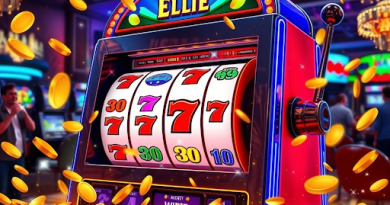
That produces a distinctive design language. High-contrast symbols, primary colours, immediate legibility, minimal narrative. Fruit, sevens, bells and stars rather than characters and storylines. Fast rounds and no lengthy cutscenes.
When the company moved into online distribution, it carried that visual grammar with it more or less unchanged. The result is a catalogue that looks conspicuously traditional next to the output of studios that grew up on the web — and which has proved remarkably durable commercially.
The regional footprint
The company’s expansion tracked the liberalisation of gambling markets across central and eastern Europe through the 2000s and 2010s, followed by southern Europe and parts of Latin America. Romania, Bulgaria, Italy, Germany, Turkey and Spain all became significant markets.
Two things drove adoption. The first was regulatory: as markets formalised, operators needed certified suppliers, and a European manufacturer already dealing with European regulators was a straightforward choice. The second was familiarity — in markets where players had encountered these cabinets in physical venues first, recognisable titles online had an immediate advantage over unknown ones.
The catalogue has since split across two brands. The classic online library operates as Amusnet, following a rebrand from EGT Interactive, while EGT Digital handles the company’s newer output. The distinction is visible in the games themselves: the Amusnet side skews towards the traditional fruit-machine format, while EGT Digital’s releases lean into the linked-jackpot mechanics that have dominated the wider industry in recent years. Both catalogues, running to over 550 titles between them, are indexed at retrigger.club.
Why the old format refused to die
The interesting question is why a design language rooted in physical cabinets has survived the transition to mobile so comfortably, when the industry consensus for years was that online play demanded richer, more elaborate games.
Part of the answer is demographic. A meaningful share of online slot players moved across from physical venues and brought their preferences with them. Familiarity is a genuine product advantage in a category where most titles are otherwise indistinguishable.
Part of it is the screen. A design built for legibility at a distance translates unusually well to a phone held at arm’s length. Games designed for a desktop browser in 2012, with dense interfaces and small type, translate badly.
And part of it is pace. A classic three-row, ten-line game resolves in a couple of seconds with no bonus sequence to sit through. On mobile, in short sessions, that speed is a feature — which is also, from a player-protection perspective, exactly the problem. Fast, frictionless rounds are precisely the design characteristic that regulators across Europe have been scrutinising most closely, and several jurisdictions have introduced minimum spin durations in response.
The cabinet business never went away
An easy assumption is that online distribution replaced the physical machines. It did not. The cabinet business continues alongside the digital one, and the two feed each other in ways that are unusual among consumer technology categories.
Titles are frequently developed for physical venues first and ported online once they have demonstrated performance on the floor — which is a genuine advantage. A game that has run in hundreds of venues arrives online with real behavioural data behind it, rather than a designer’s hypothesis.
The traffic also runs the other way. Players who encounter a title online increasingly recognise it in a venue, and vice versa. For a manufacturer operating in both channels, each reinforces the other at no additional development cost.
This dual presence is part of why the traditional aesthetic persisted. A studio building only for browsers has every incentive to design for the browser. A manufacturer whose games must work on a cabinet in a noisy hall and on a phone on a bus converges on something legible in both — which turns out to be the high-contrast, low-narrative style that has proved so durable.
An export industry nobody counts
Bulgaria’s gaming technology sector rarely features in accounts of the country’s economy, which tend to focus on IT outsourcing and manufacturing. But it fits the same pattern: engineering capability, lower costs than western Europe, EU market access, and an early move into a category that turned out to be much larger than anyone expected.
The sector’s growth has not been uncontroversial at home. Bulgaria tightened its own gambling advertising rules significantly in 2020, restricting promotion in broadcast and print — a reminder that a successful export industry and a well-regulated domestic market are separate problems.
For players, the takeaway is narrower. The familiar look of these games is a design inheritance from physical cabinets, not a marker of better odds. The mathematics sits in the paytable and the information screen, and it is the same arithmetic regardless of how traditional the symbols look.
Gambling should never be treated as a source of income. Support: Gambling Therapy. Strictly 18+.