The Desk Worker’s Survival Guide: Beating “Tech Neck” with a Wearable Massager
“Tech neck” has become one of the defining discomforts of modern work life. It is not a medical diagnosis in itself, but a pattern of strain caused by prolonged screen use, forward head posture, and static sitting. The result is a familiar mix of neck stiffness, shoulder tightness, upper back fatigue, and sometimes even headaches or reduced concentration.
Wearable massagers have emerged as a practical response to this problem. Designed to sit comfortably around the neck and shoulders, these devices aim to counteract daily postural strain through automated kneading, heat, and rhythmic pressure. For desk workers, they offer a convenient way to interrupt tension before it becomes chronic.
Understanding how tech neck develops—and how wearable massagers address it—helps explain why they are becoming a common part of modern self-care routines.
What Exactly Is “Tech Neck”?
Tech neck refers to the strain placed on the cervical spine and surrounding muscles when the head is repeatedly tilted forward for extended periods. This posture is common during computer work, smartphone use, and tablet reading.
When the head moves forward even slightly, the load on the neck muscles increases significantly. Over time, this creates a cycle of fatigue and compensation in the upper body.
Key Symptoms of Tech Neck
- Persistent neck stiffness
- Shoulder tightness and soreness
- Reduced neck mobility
- Upper back fatigue
- Occasional tension headaches
- Forward-rounded shoulder posture
These symptoms tend to build gradually, often becoming noticeable only after they begin to affect daily comfort.
Why Desk Work Is a Major Trigger
Modern desk setups are a primary contributor to tech neck because they encourage prolonged static posture.
Prolonged Sitting
Sitting for long hours reduces movement in the spine and shoulders, which slows circulation and increases muscle stiffness.
Screen Height Issues
Monitors that are too low encourage the head to tilt forward, increasing pressure on the cervical spine.
Repetitive Focus Positioning
Concentration often leads to unconscious muscle tightening, especially in the shoulders and upper back.
Lack of Recovery Time
Without regular breaks, muscles remain in a semi-contracted state for hours at a time.
How Wearable Massagers Help Counter Tech Neck
Wearable massagers are designed specifically to target the areas most affected by tech neck. Unlike handheld devices, they require no active effort, making them ideal for busy work routines.
1. Targeted Cervical and Trapezius Relief
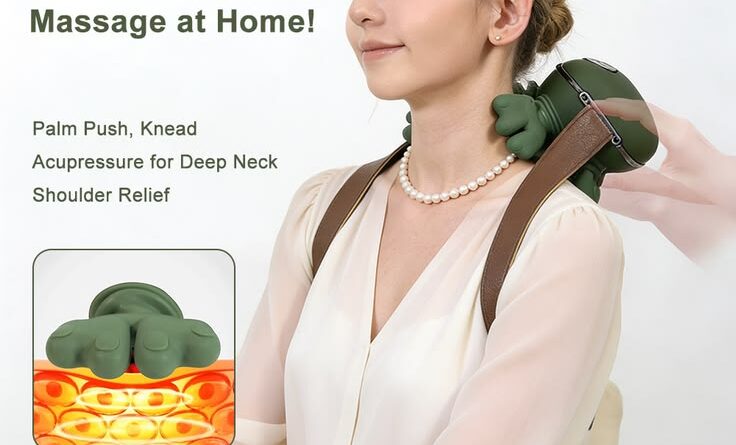
Wearable Neck and Shoulder Massager are shaped to wrap around the neck and shoulders, placing massage nodes directly on key tension zones such as the upper trapezius and cervical muscles.
This positioning allows them to apply consistent pressure where tech neck symptoms are most common.
2. Deep Kneading Action
Most wearable devices use rotating or rolling nodes that simulate human hands. This kneading motion helps loosen tight muscle fibers and reduce stiffness.
Over time, this can improve flexibility and reduce the feeling of “locked” shoulders that many desk workers experience.
3. Heat Therapy for Muscle Relaxation
Heat is a common feature in wearable massagers and plays a key role in relieving tech neck.
Warmth increases blood flow and softens tight muscle tissue, making it easier for kneading motion to penetrate deeper layers.
This combination is especially effective after long hours of sitting.
4. Rhythmic Pressure Patterns
Wearable massagers use alternating pressure cycles to mimic manual massage techniques. This prevents muscles from adapting to a single pattern and encourages deeper relaxation.
5. Hands-Free Convenience
One of the biggest advantages is usability during daily tasks. Desk workers can use wearable massagers during breaks without interrupting workflow, making recovery more consistent.
Why Wearable Massagers Fit Desk Life So Well
The effectiveness of wearable massagers is closely tied to how well they integrate into a sedentary lifestyle.
Easy to Use During Breaks
Short sessions during the workday can help prevent tension from building up.
No Manual Effort Required
Unlike rollers or manual tools, wearable devices do not require physical movement or positioning.
Portable and Flexible
Many models are cordless, allowing use at home, in the office, or even while traveling.
Limitations to Be Aware Of
While wearable massagers are effective, they are not a complete solution on their own.
Not a Posture Fix
They relieve symptoms but do not automatically correct posture habits that cause tech neck.
Limited Coverage Area
Most devices focus on the neck and shoulders and do not address lower back or full spinal alignment.
Varying Intensity Levels
Some users may find certain settings too strong or too mild depending on sensitivity and device quality.
Best Ways to Use a Wearable Massager for Tech Neck
To get the most benefit, usage should be consistent and intentional.
Short Daily Sessions
10 to 15 minutes per session is usually enough to reduce tension without overstimulation.
Use During Work Breaks
Short recovery periods during the workday can prevent buildup of stiffness.
Combine with Posture Awareness
Adjusting screen height and sitting posture enhances the effectiveness of massage therapy.
Start with Moderate Settings
Beginning at lower intensity helps muscles adapt before deeper pressure is applied.
Supporting Recovery Beyond the Device
Wearable massagers work best as part of a broader strategy for managing tech neck.
Regular Movement
Standing, stretching, and walking during breaks helps restore circulation.
Ergonomic Setup
Proper chair height, screen positioning, and arm support reduce strain.
Neck Mobility Exercises
Gentle neck rotations and shoulder rolls help maintain flexibility.
Long-Term Benefits of Consistent Use
When used regularly, wearable massagers can help reduce the impact of tech neck over time.
Reduced Muscle Tightness
Ongoing tension is gradually released, leading to less stiffness throughout the day.
Improved Comfort During Work
Less strain leads to better focus and productivity.
Fewer Tension Headaches
Reducing neck and shoulder tightness can lower headache frequency.
Better Postural Awareness
Relief from discomfort often encourages more mindful posture habits.
A Practical Tool for Modern Work Life
Tech neck is a modern problem created by modern habits. It cannot be solved by massage alone, but it can be managed effectively with the right combination of tools and awareness.
Wearable massagers offer a practical solution because they fit seamlessly into the workday. They provide consistent relief without requiring time away from responsibilities, making them especially useful for desk-based professionals.
Final Thoughts
Beating tech neck is not about one-time fixes—it is about interrupting the cycle of strain before it becomes chronic. Wearable massagers help do exactly that by delivering targeted, hands-free relief to the muscles most affected by screen-heavy lifestyles.
When combined with better posture, regular movement, and short recovery breaks, they become a powerful tool for maintaining comfort, reducing stiffness, and supporting long-term neck health in a digital world.